Monaco and Versailles share a strong image: that of places synonymous with prestige and refinement. One is the symbol of the royal power of Louis XIV, the other that of the Grimaldi dynasty. Both are distinguished by their history, their role as an international showcase, and their ability to perpetuate a tradition of elegance and representation.

If Versailles is inseparable from Louis XIV, who made his castle a center of the world, in Monaco, it is the Grimaldi dynasty that, for more than seven centuries, has shaped the image of a micro-state internationally. Prince Rainier III, often nicknamed “the Builder Prince,” and his wife Grace Kelly, an icon of Hollywood elegance, were able to give Monaco a cultural and glamorous dimension that recalls the magnificence of the Versailles court.
Like Versailles in its time, Monaco is a place where history and the present engage in dialog. In the 17th century, the Sun King received diplomats, artists, and crowned heads in Versailles. Today, Prince Albert II continues the traditions of the Rock by welcoming heads of state, patrons, and creators, while also anchoring the principality in sustainable modernity.
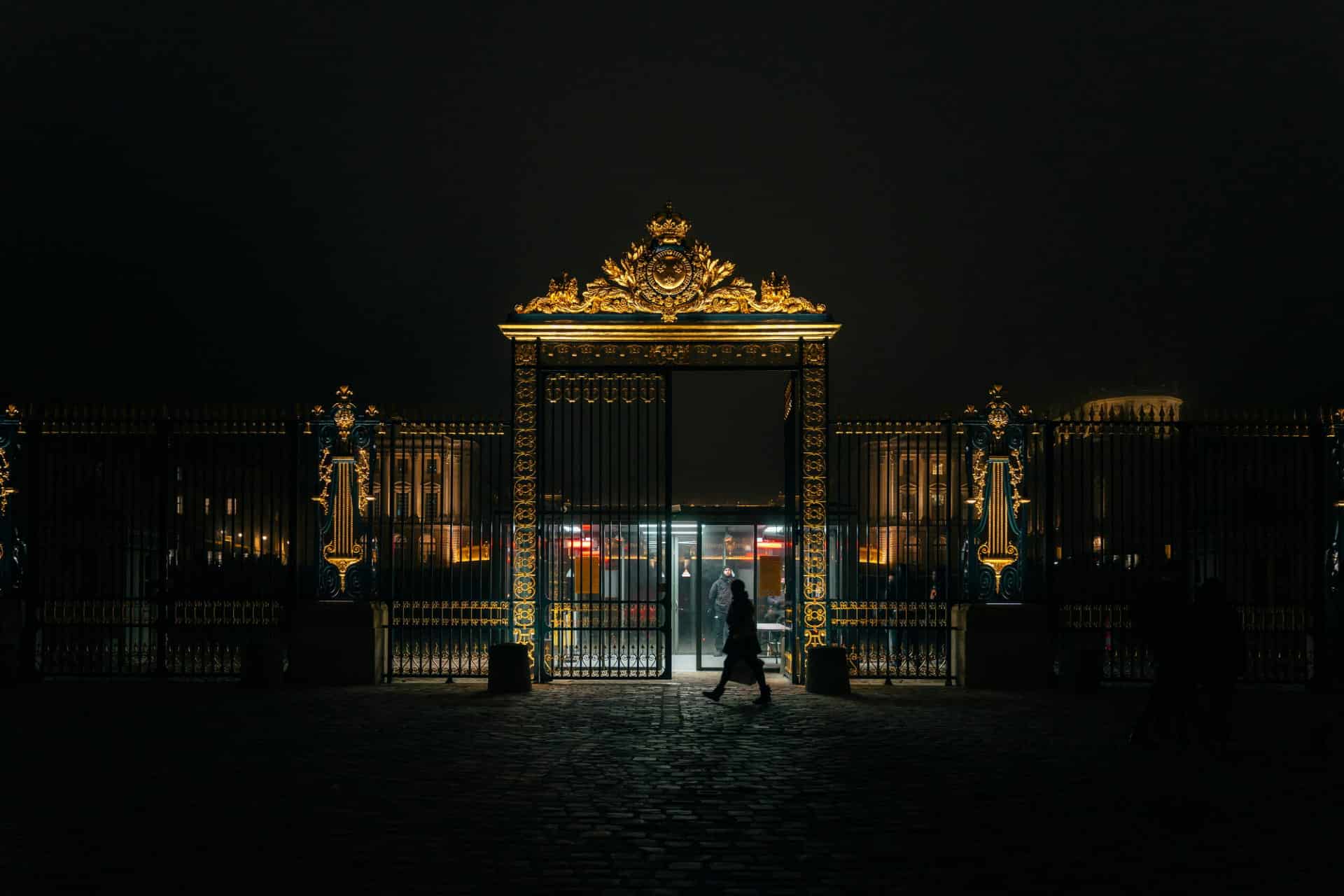
Impossible to talk about this comparison without mentioning what best represents them: their iconic residences. The Palace of Versailles, with its Hall of Mirrors, extravagant salons, and royal opera house, is a masterpiece designed to impress and assert absolute power. In Monaco, the Prince’s Palace, perched on the Rock, overlooks the sea as a symbol of prestige.
If Versailles is visited for its past frozen in time, the Prince’s Palace lives to the rhythm of the seasons and events. Indeed, it hosts official ceremonies, summer concerts, and national holidays. In both cases, architecture and decor become the stage for the performance, where every detail tells a story.
Imagined by André Le Nôtre, a true pioneer in his art, the gardens of Versailles sublimely capture the palette of French classical art. In Monaco, the accentuated reliefs do not allow for the same artistic feats. However, the spirit of harmony and staging remains present.
The Exotic Garden, suspended on the edge of a cliff, displays cacti and rare plants above the city-state. On the Mediterranean quays, the Princess Grace Rose Garden, another of the Principality’s gardens, is somewhat reminiscent of Versailles with its geometric curves and delicacy. Even the Japanese garden, offered by the Japanese city of Yokohama, follows this tradition: a place designed for contemplation, where each stone and each plant occupies a chosen spot.

In Versailles, the grandiose parties organized by Louis XIV were renowned throughout Europe. In Monaco, the art of hosting is no less refined: charity galas, social balls, and cultural events punctuate the year. The Rose Ball, created by Princess Grace and now organized by Princess Caroline of Hanover, is a perfect example. Its sumptuous decorations and ever-larger halls welcome carefully selected guests. In the room, haute couture dresses and jewelry sparkle, like the silks of the Versailles courtiers.
Even the prestigious Monte-Carlo Opera, designed by Charles Garnier, the architect of the Paris Opera, strongly recalls Versailles’ desire to place the arts at the center of social life. In the Monegasque national opera, theater and music are the primary vectors of prestige, just like in the Hall of Mirrors where Molière performed.
In a more contemporary vein, Monaco perpetuates the taste for excellence that Versailles has always embodied. High-end boutiques, jewelers on Casino Square, five-star hotels, and Michelin-starred gastronomy form a showcase of international luxury that attracts hundreds of thousands of tourists each year.
The Hôtel de Paris Monte-Carlo, for example, is to Monaco what the royal apartments were to the capital of the Yvelines. It forms a place where the service borders on perfection and in which every detail is thot out to honor the guest. The restaurant Le Louis XV – Alain Ducasse, triple Michelin-starred, elevates Mediterranean cuisine to the level of art, just like the Versailles banquets of the time.
Just as Versailles was a diplomatic center of the Grand Century, Monaco shines today on the international stage. Its Formula 1 Grand Prix attracts the world’s elite every year. In 2025, Bernard Arnault, Zinédine Zidane, and Dua Lipa, to name just a few, were part of the event. The yachts moored in Port Hercule, in their own way, recall the processions that used to parade in the royal courtyard.
This radiance goes beyond events: it is embodied in an image of refinement and savoir-vivre that inspires. In Versailles, the ambassadors left impressed by the splendor of the castle; in Monaco, visitors leave the principality with the memory of a unique place where beauty blends with the art of living.
The common strength of Versailles and Monaco lies in their ability to reinvent themselves without losing their identity. Versailles, once a symbol of absolute power, has become a major site of world heritage. Monaco, while maintaining its high-end image, is committed to ecological transition. Prince Albert II is working toward the protection of the oceans and the reduction of the principality’s carbon footprint.
Monaco and Versailles share a rare alchemy. Their sumptuous settings and rich histories captivate beyond borders. One extends its gardens as far as the eye can see under the Parisian sky, the other displays its bright facades facing the Mediterranean.